Jan 11, 2026
Building Got Easier. Why Do Apps Feel Off?
UX/UI
Vibe coding
AI
With vibe coding, building apps is no longer a special skill.
Anyone can do it now. AI, vibe coding, tools everywhere. So shipping something that “works” isn’t impressive anymore, yet most new apps feel exhausting to use. They’re not broken. They’re not slow. They’re just super annoying..
You open the app and immediately feel it, buttons don’t behave the same way, screens feel crowded for no reason, and you even hesitate before clicking, even when you know exactly what you want to do. That hesitation is important because it’s your brain telling you something is off.
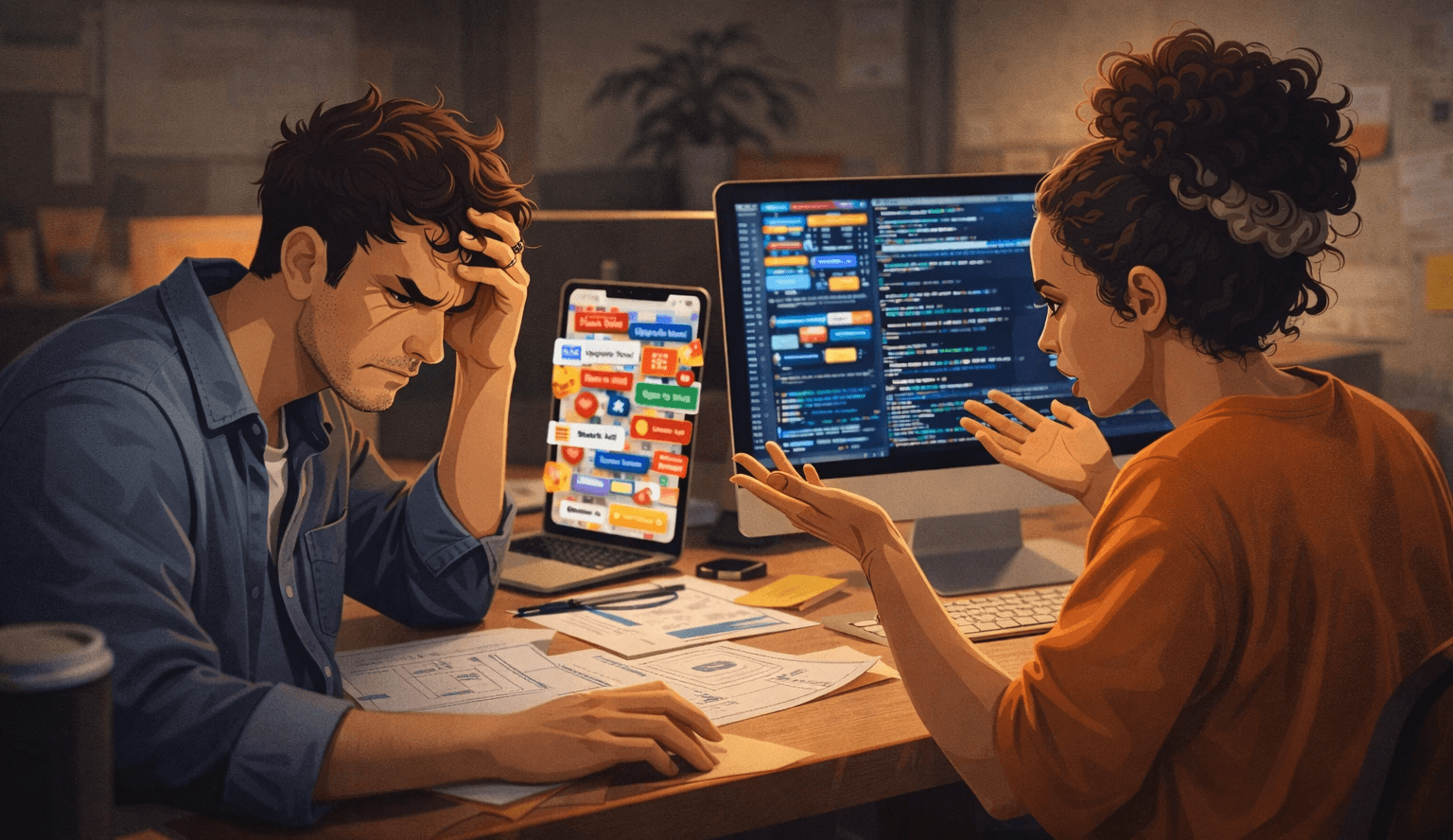
That feeling isn’t random.
It’s the result of UX/UI decisions.
And no, UX/UI isn’t colours, fonts, or pretty screens like what most think, it’s how a product feels while you’re using it.
You just gotta ask yourself some simple questions: Does it feel calm or stressful? Clear or confusing? Is it helping me or constantly asking for attention?
That’s what UX/UI controls.
And that’s why it’s quietly becoming one of the most valuable tech skills.
So.. AI is cheap now. Good experience isn’t. How do we notice a bad UX?
Sometimes you really have to stop and think about it. You don’t learn good UX from good apps. You learn it from bad ones. noticing when software wastes your time, feeling when something is one click too many... from knowing when to remove instead of add.
AI hasn’t lived that, but humans have.
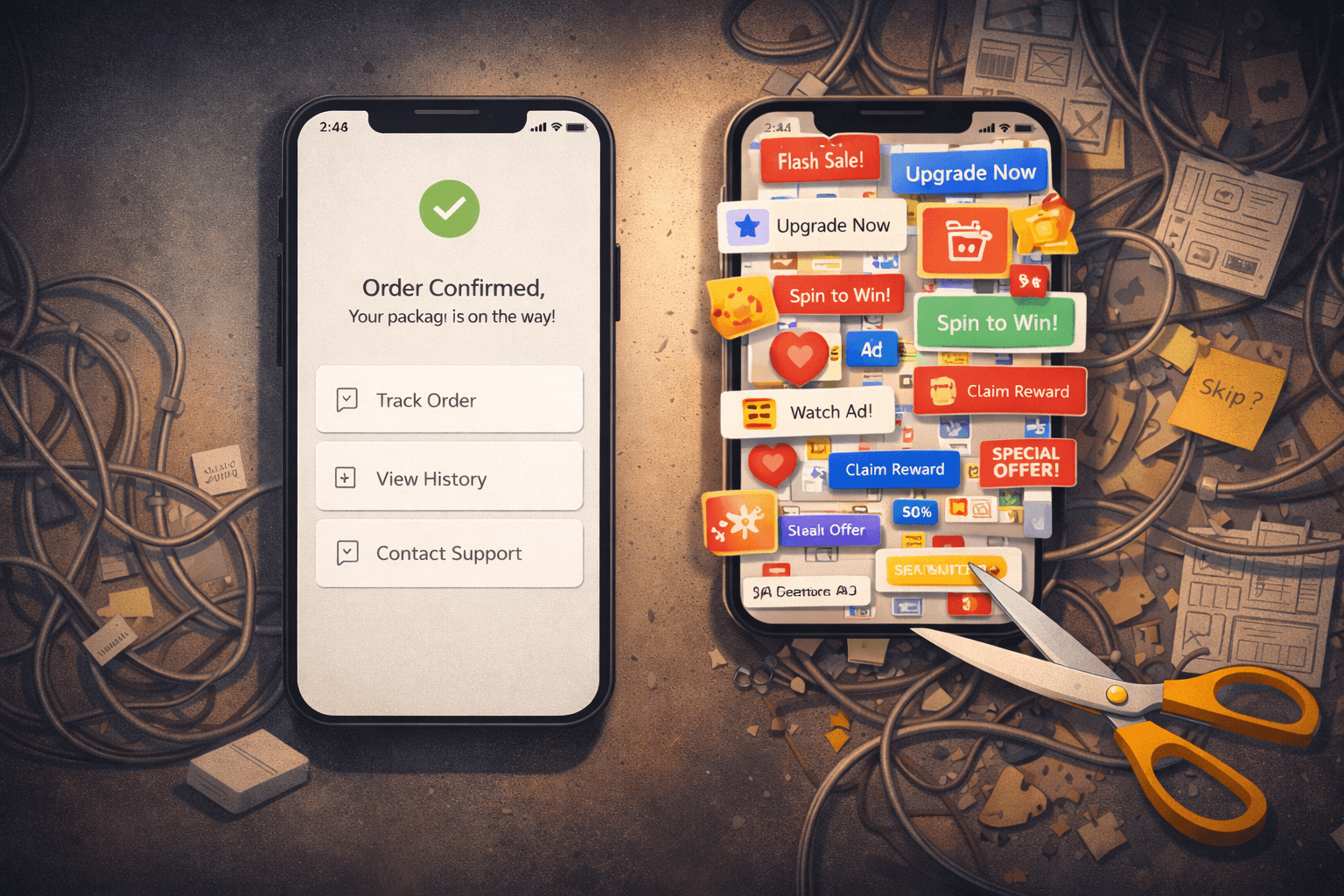
Vibe coding doesn’t replace designers, It amplifies them.
Good designers move faster than ever, they can iterate quickly, test ideas, and refine experiences without friction.
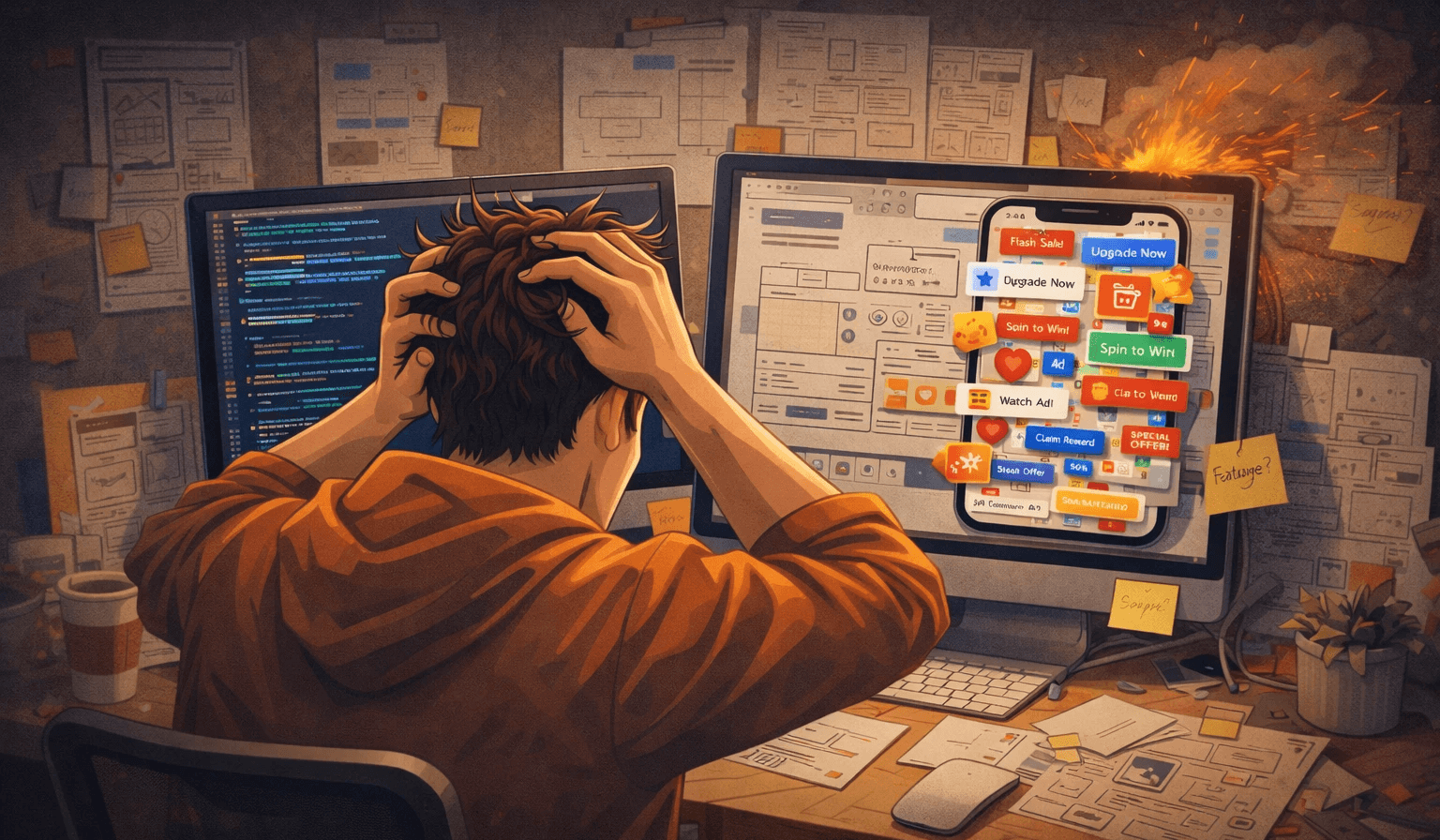
Bad designers just ship clutter faster... more screens, more features, more things fighting for attention.
The tool doesn’t know when to stop, but the human does, and that's your edge.
And if you’re not a UX/UI designer,
This isn’t gatekeeping, it’s a learnable skill.
You don’t need talent to start, all you need is restraint.
Restraint is choosing clarity over cleverness.
It’s stopping when the product already works. It’s removing friction instead of adding options. It's trusting the user instead of dragging them. If you’re building with modern tools, your job isn’t to add more, It’s to remove more, especially when something feels “almost useful”.. YOU HAVE TO PAUSE and ask yourself..
"Is this actually necessary?"
Rules That Make Apps Easier to Use:
Consistency beats creativity. If a button behaves one way on one screen, it should behave the same everywhere because changing behaviour costs mental energy.
Fewer choices beat smarter choices. Every option you add is a decision you force on someone else.
Design for tired people. Assume your user is distracted, in a hurry, or slightly annoyed. If something needs explaining, it probably needs simplifying.
Steal from products that feel calm. Sure.. Not the loud ones, the quiet ones that people trust, copy their spacing, hierarchy, and silence.. but you have to stop when it feels done.
Most bad UX comes from one extra feature added after the product was already good enough.
You don’t need taste to start, all you need is to develop it by paying attention.
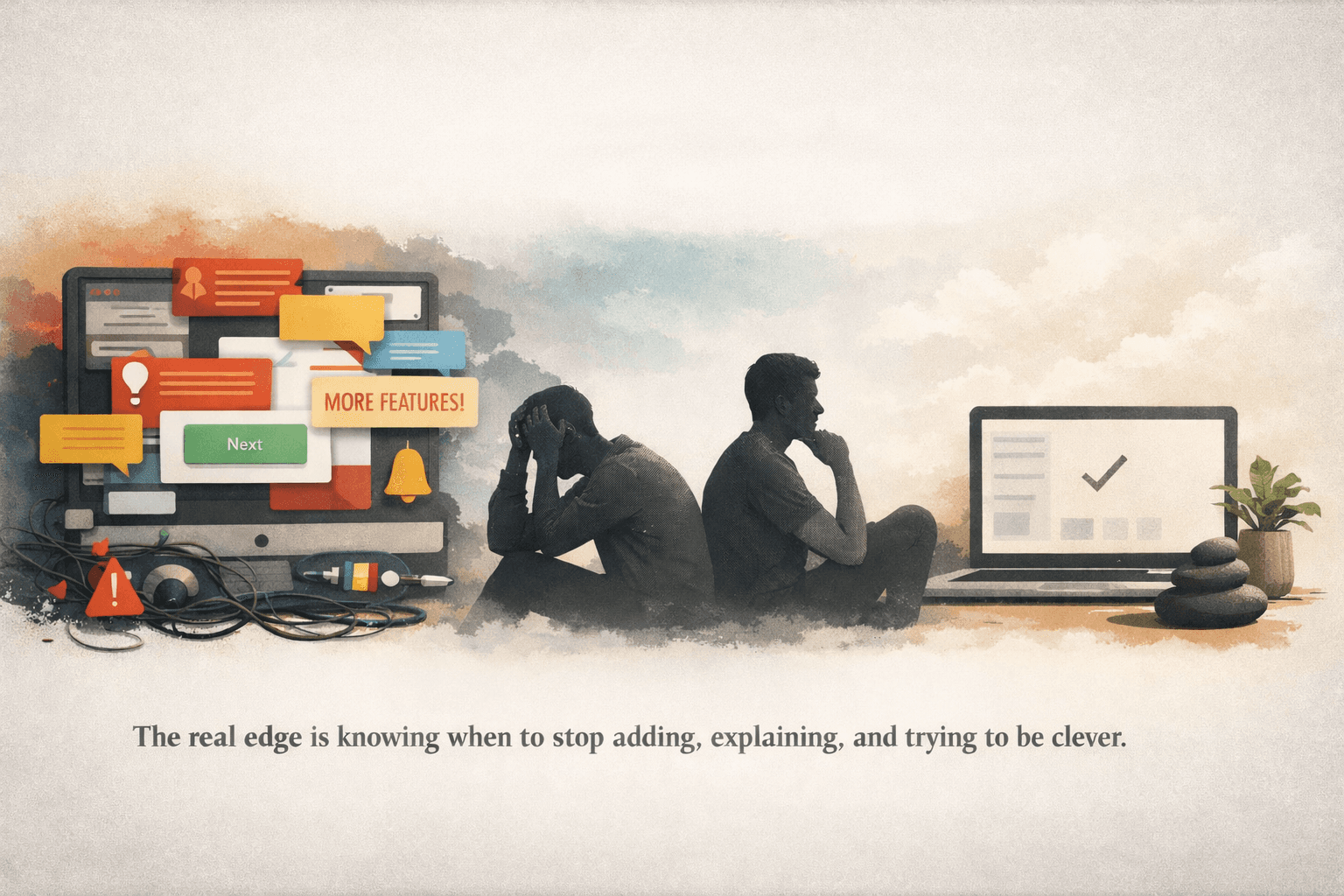
At the end of the day, lock one thing in your head: The real edge is knowing when to stop adding, explaining, and trying to be clever.
FAQ
01
What services do you offer?
02
What does your process look like?
03
How long does a project take?
04
How do you price projects?
05
Do you work with startups or larger companies?
06
What do you need from us to get started?
07
Will we be able to edit the site ourselves?
08
Do you offer branding as a standalone service?
Jan 11, 2026
Building Got Easier. Why Do Apps Feel Off?
UX/UI
Vibe coding
AI
With vibe coding, building apps is no longer a special skill.
Anyone can do it now. AI, vibe coding, tools everywhere. So shipping something that “works” isn’t impressive anymore, yet most new apps feel exhausting to use. They’re not broken. They’re not slow. They’re just super annoying..
You open the app and immediately feel it, buttons don’t behave the same way, screens feel crowded for no reason, and you even hesitate before clicking, even when you know exactly what you want to do. That hesitation is important because it’s your brain telling you something is off.
That feeling isn’t random.
It’s the result of UX/UI decisions.
And no, UX/UI isn’t colours, fonts, or pretty screens like what most think, it’s how a product feels while you’re using it.
You just gotta ask yourself some simple questions: Does it feel calm or stressful? Clear or confusing? Is it helping me or constantly asking for attention?
That’s what UX/UI controls.
And that’s why it’s quietly becoming one of the most valuable tech skills.
So.. AI is cheap now. Good experience isn’t. How do we notice a bad UX?
Sometimes you really have to stop and think about it. You don’t learn good UX from good apps. You learn it from bad ones. noticing when software wastes your time, feeling when something is one click too many... from knowing when to remove instead of add.
AI hasn’t lived that, but humans have.
Vibe coding doesn’t replace designers, It amplifies them.
Good designers move faster than ever, they can iterate quickly, test ideas, and refine experiences without friction.
Bad designers just ship clutter faster... more screens, more features, more things fighting for attention.
The tool doesn’t know when to stop, but the human does, and that's your edge.
And if you’re not a UX/UI designer,
This isn’t gatekeeping, it’s a learnable skill.
You don’t need talent to start, all you need is restraint.
Restraint is choosing clarity over cleverness.
It’s stopping when the product already works. It’s removing friction instead of adding options. It's trusting the user instead of dragging them. If you’re building with modern tools, your job isn’t to add more, It’s to remove more, especially when something feels “almost useful”.. YOU HAVE TO PAUSE and ask yourself..
"Is this actually necessary?"
Rules That Make Apps Easier to Use:
Consistency beats creativity. If a button behaves one way on one screen, it should behave the same everywhere because changing behaviour costs mental energy.
Fewer choices beat smarter choices. Every option you add is a decision you force on someone else.
Design for tired people. Assume your user is distracted, in a hurry, or slightly annoyed. If something needs explaining, it probably needs simplifying.
Steal from products that feel calm. Sure.. Not the loud ones, the quiet ones that people trust, copy their spacing, hierarchy, and silence.. but you have to stop when it feels done.
Most bad UX comes from one extra feature added after the product was already good enough.
You don’t need taste to start, all you need is to develop it by paying attention.
At the end of the day, lock one thing in your head: The real edge is knowing when to stop adding, explaining, and trying to be clever.
FAQ
01
What services do you offer?
02
What does your process look like?
03
How long does a project take?
04
How do you price projects?
05
Do you work with startups or larger companies?
06
What do you need from us to get started?
07
Will we be able to edit the site ourselves?
08
Do you offer branding as a standalone service?
Jan 11, 2026
Building Got Easier. Why Do Apps Feel Off?
UX/UI
Vibe coding
AI
With vibe coding, building apps is no longer a special skill.
Anyone can do it now. AI, vibe coding, tools everywhere. So shipping something that “works” isn’t impressive anymore, yet most new apps feel exhausting to use. They’re not broken. They’re not slow. They’re just super annoying..
You open the app and immediately feel it, buttons don’t behave the same way, screens feel crowded for no reason, and you even hesitate before clicking, even when you know exactly what you want to do. That hesitation is important because it’s your brain telling you something is off.
That feeling isn’t random.
It’s the result of UX/UI decisions.
And no, UX/UI isn’t colours, fonts, or pretty screens like what most think, it’s how a product feels while you’re using it.
You just gotta ask yourself some simple questions: Does it feel calm or stressful? Clear or confusing? Is it helping me or constantly asking for attention?
That’s what UX/UI controls.
And that’s why it’s quietly becoming one of the most valuable tech skills.
So.. AI is cheap now. Good experience isn’t. How do we notice a bad UX?
Sometimes you really have to stop and think about it. You don’t learn good UX from good apps. You learn it from bad ones. noticing when software wastes your time, feeling when something is one click too many... from knowing when to remove instead of add.
AI hasn’t lived that, but humans have.
Vibe coding doesn’t replace designers, It amplifies them.
Good designers move faster than ever, they can iterate quickly, test ideas, and refine experiences without friction.
Bad designers just ship clutter faster... more screens, more features, more things fighting for attention.
The tool doesn’t know when to stop, but the human does, and that's your edge.
And if you’re not a UX/UI designer,
This isn’t gatekeeping, it’s a learnable skill.
You don’t need talent to start, all you need is restraint.
Restraint is choosing clarity over cleverness.
It’s stopping when the product already works. It’s removing friction instead of adding options. It's trusting the user instead of dragging them. If you’re building with modern tools, your job isn’t to add more, It’s to remove more, especially when something feels “almost useful”.. YOU HAVE TO PAUSE and ask yourself..
"Is this actually necessary?"
Rules That Make Apps Easier to Use:
Consistency beats creativity. If a button behaves one way on one screen, it should behave the same everywhere because changing behaviour costs mental energy.
Fewer choices beat smarter choices. Every option you add is a decision you force on someone else.
Design for tired people. Assume your user is distracted, in a hurry, or slightly annoyed. If something needs explaining, it probably needs simplifying.
Steal from products that feel calm. Sure.. Not the loud ones, the quiet ones that people trust, copy their spacing, hierarchy, and silence.. but you have to stop when it feels done.
Most bad UX comes from one extra feature added after the product was already good enough.
You don’t need taste to start, all you need is to develop it by paying attention.
At the end of the day, lock one thing in your head: The real edge is knowing when to stop adding, explaining, and trying to be clever.
FAQ
What services do you offer?
What does your process look like?
How long does a project take?
How do you price projects?
Do you work with startups or larger companies?
What do you need from us to get started?
Will we be able to edit the site ourselves?
Do you offer branding as a standalone service?